
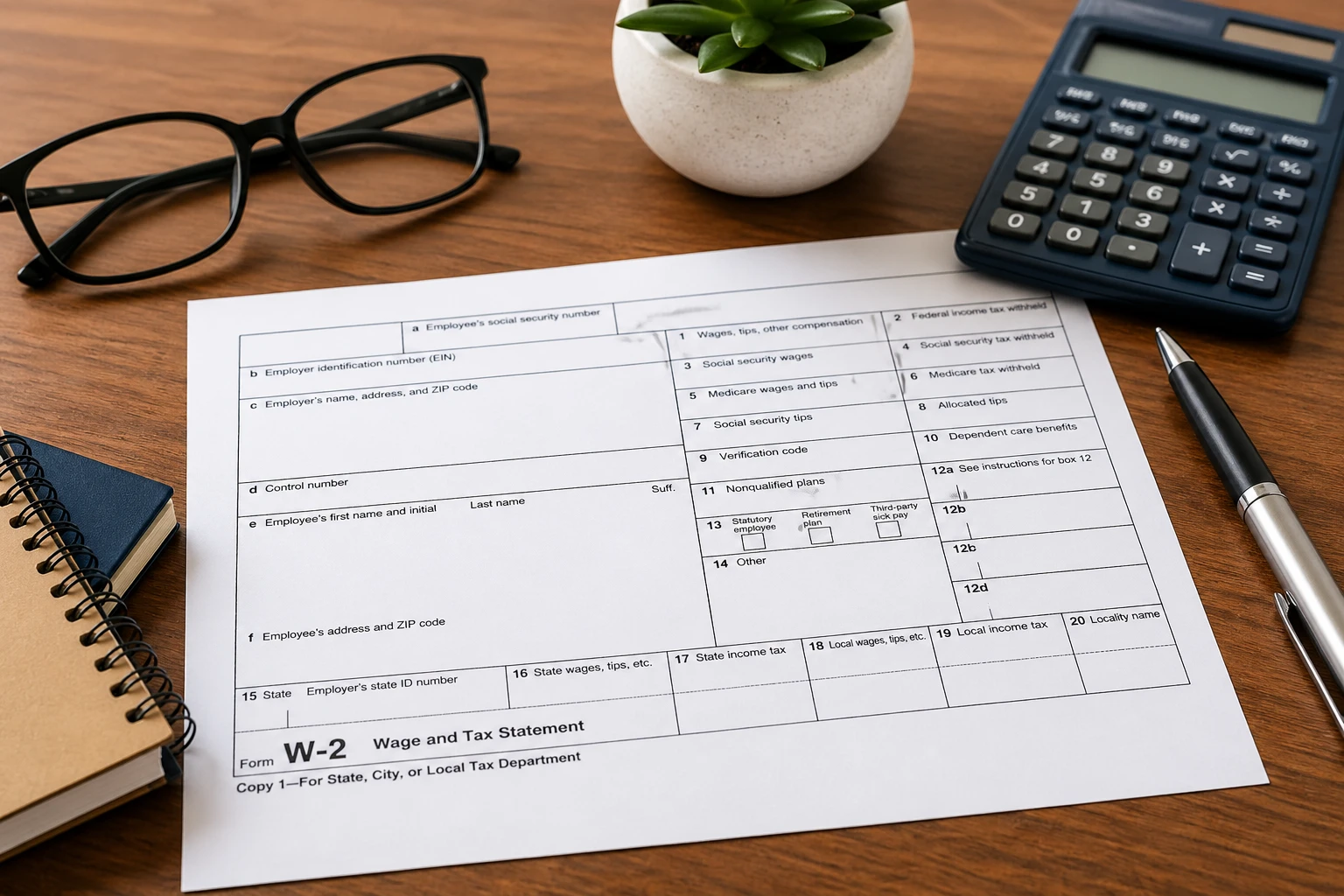
Understanding your W-2 is not optional—it’s essential. Every year, this single document quietly determines how accurate your tax return will be, how much refund you receive, or how much you owe. Yet most people glance at it for a few seconds and move on. That’s a mistake.
I’ve seen it happen too often. A missed number. A misunderstood box. A small oversight that leads to delays, penalties, or lost money. The truth? Understanding your W-2 puts you in control. And once you know how to read it properly, it stops being confusing and starts becoming useful.
Let’s break it down. Clearly. Practically. Step by step.
What Is a W-2 Form?
A W-2 form—officially called the Wage and Tax Statement—is issued by your employer. It summarizes your total earnings and the taxes withheld from your paycheck during the year.
Simple idea. Big impact.
If you’re an employee, you’ll receive one (or more) W-2 forms. If you worked multiple jobs, expect multiple forms. Each one matters.
Here’s what it tells you:
- How much you earned
- How much tax was withheld
- What benefits or deductions were applied
Understanding your W-2 means understanding your financial footprint for the year. It’s your starting point for filing taxes accurately.
When and How You Receive Your W-2
Timing matters.
Employers are required to send out W-2 forms by January 31. That’s the deadline. If you opted for electronic delivery, you’ll likely get it even sooner.
Delivery methods include:
- Physical mail
- Employee portals
- Payroll platforms
If February rolls around and nothing shows up, act quickly:
- Contact your employer or HR department
- Verify your mailing address or email
- Check your employee dashboard
Don’t wait. Delays here can push your entire tax filing timeline back.
Understanding Each Section of Your W-2
This is where most people get lost. Let’s fix that.
Employee and Employer Information
Boxes a through f contain identifying details:
- Your name and address
- Your Social Security Number (SSN)
- Employer’s name, address, and EIN
This might seem basic. It’s not.
Even a small typo—especially in your SSN—can cause IRS processing issues. Always double-check this section first.
Wage and Income Details
These boxes define your income. But they’re not identical—and that’s where confusion starts.
| Box | What It Represents | Why It Matters |
| Box 1 | Total taxable wages | Used for federal income tax |
| Box 3 | Social Security wages | May be higher than Box 1 |
| Box 5 | Medicare wages | Often the highest amount |
Why are they different?
Because certain deductions—like retirement contributions—reduce your taxable income for federal taxes (Box 1) but not for Social Security or Medicare.
Understanding your W-2 here helps you see how pre-tax benefits impact your earnings.
Taxes Withheld
These boxes show what you’ve already paid.
- Box 2: Federal income tax withheld
- Box 4: Social Security tax
- Box 6: Medicare tax
Think of this as your running tab with the government.
Too much withheld? You get a refund.
Too little? You owe.
Understanding your W-2 at this level helps you adjust future withholdings and avoid surprises next year.
Other Compensation and Benefits
Now it gets interesting.
Boxes 10, 12, and 14 contain additional financial data that often goes overlooked.
- Box 10: Dependent care benefits
- Box 12: Special codes for benefits and deductions
- Box 14: Employer-specific information
Box 12 is the real powerhouse. It includes coded entries that reveal retirement contributions, health benefits, and more.
Ignore this section, and you miss part of your financial story.
State and Local Tax Information
Boxes 15 through 20 deal with state and local taxes.
Not everyone will have entries here—but if you do, they matter.
- State wages
- State income tax withheld
- Local taxes (if applicable)
If you lived or worked in multiple states, this section becomes critical. It determines where and how you file additional returns.
Common W-2 Codes Explained
Those codes in Box 12? They look cryptic. They’re not.
Here are some of the most common ones:
| Code | Meaning |
| D | 401(k) contributions |
| DD | Employer-sponsored health coverage cost |
| W | Health Savings Account (HSA) contributions |
Let’s make this practical.
If you see Code D, that means you contributed to a retirement plan. That’s good—but it also affects your taxable income.
If you see Code DD, don’t panic. It’s informational only. It shows the total cost of your health insurance—not what you owe.
Understanding your W-2 codes gives you insight into benefits you might otherwise overlook.
How to Use Your W-2 When Filing Taxes
This is where everything connects.
When you file your taxes, you’ll pull numbers directly from your W-2. Accuracy matters. A lot.
Here’s what to focus on:
- Box 1 goes into your income section
- Box 2 determines tax payments already made
- Box 12 codes may affect deductions or credits
If you’re filing electronically, most platforms guide you through this step. Still, double-check every entry.
A single incorrect number can trigger delays—or worse, an audit flag.
Understanding your W-2 ensures you’re not guessing. You’re filing with confidence.
Common Mistakes to Avoid
Let’s keep this practical. These errors happen all the time:
- Entering numbers incorrectly
- Ignoring additional W-2 forms from past jobs
- Overlooking Box 12 codes
- Filing before receiving all documents
- Not reviewing personal information
Each one seems small. Combined, they create real problems.
Here’s a quick checklist before you file:
- Confirm your name and SSN
- Verify all income totals
- Check tax withholding amounts
- Review every code
Understanding your W-2 helps you avoid these pitfalls entirely.
What to Do If Your W-2 Is Incorrect
Mistakes happen. Employers are human too.
If something looks off:
- Contact your employer immediately
- Request a corrected form (W-2c)
- Wait for the updated version before filing
Filing with incorrect data can lead to amended returns later. That’s time-consuming and frustrating.
Fix it early. Move forward cleanly.
What If You Lose Your W-2?
It happens. No panic required.
Here are your options:
- Request a copy from your employer
- Download it from your payroll system
- Use IRS transcripts as a backup
Digital access has made this easier than ever.
Still, make it a habit to store your W-2 securely—both digitally and physically.
W-2 vs. 1099: What’s the Difference?
This is a big one.
A W-2 means you’re an employee. A 1099 means you’re an independent contractor.
Here’s the difference in plain terms:
| Feature | W-2 Employee | 1099 Contractor |
| Tax Withholding | Yes | No |
| Employer Taxes | Paid by employer | Paid by you |
| Benefits | Often included | Rare |
If you receive a W-2, taxes have already been withheld. That simplifies filing.
If you receive a 1099, you’re responsible for calculating and paying taxes yourself.
Understanding your W-2 helps you recognize where you stand—and what responsibilities come with it.
Why Understanding Your W-2 Matters
This isn’t just about taxes. It’s about awareness.
When you truly understand your W-2, you:
- Catch errors early
- Maximize refunds
- Avoid penalties
- Plan smarter for the future
You also gain clarity on your income, benefits, and deductions.
That’s powerful.
Most people treat their W-2 like a formality. It’s not. It’s a financial snapshot. A yearly summary. A decision-making tool.
Final Thoughts
Understanding your W-2 changes the way you approach taxes. It removes uncertainty. It replaces guesswork with clarity.
Take a few extra minutes. Review every section. Ask questions when something doesn’t make sense.
That small effort pays off. Every year.
Because when you understand your W-2, you’re not just filing taxes—you’re managing your financial life with intention.
FAQs
It reports your annual wages and the taxes withheld by your employer for tax filing purposes.
Employees who earned wages from an employer during the tax year receive a W-2.
Employers must send it by January 31 each year.
It helps you file accurate taxes, avoid errors, and ensure you receive the correct refund or payment amount.
Verify your name, Social Security number, and income amounts for accuracy.
Each box represents specific details like wages, taxes withheld, and benefits or deductions.
Yes, you must include all W-2 forms from every employer you worked for.
Contact your employer or HR department immediately to request a copy.
Ask your employer for a corrected version called Form W-2c.
Keep it for at least 3–7 years for tax records and potential audits.